How to Choose Which Type of Yoga Class to Take!
- Jessica Hildebrand
- Oct 28, 2020
- 5 min read
Updated: Aug 2, 2021
So you've decided to start going to yoga class. You start looking at the schedules at your local yoga studios & see words like Hatha, Vinyasa, Yin... & you're completely LOST! This is where many of us get discouraged & never even start.
Here's what you need to know -
Simply put, Yoga is the union of mind & body. It combine physical postures, breathing techniques, and meditation or relaxation. ... There are several different types of yoga with different interpretations.
KUNDALINI YOGA
Kundalini Yoga focuses on the rising of Kundalini energy. This energy lies at the fourth vertebrae and is dormant in most of us – until awakened.
Yogi Bhajan, teacher, and spiritual leader, brought this style of yoga to the West in the late 1960s. “Kundalini” in Sanskrit translates to “life force energy” (known as prana or chi in the yoga community), which is thought to be tightly coiled at the base of the spine. These yoga sequences are carefully designed to unlock this energy & reduce stress & negative thinking.
This is accomplished by challenging both mind & body with chanting, singing, meditation, and a specific series of poses paired with breath work & chanting. Typically everyone is wearing white, as it’s believed to deflect negativity & increase your aura. A kundalini class starts with a mantra (a focus for the class), then includes breathing exercises, warmups to get the body moving, increasingly more challenging poses, & a final relaxation and meditation.
Who Might Like It: Anyone in search of a physical, yet also spiritual practice, or those who like singing or chanting.
VINYASA YOGA
The word “vinyasa” translates to “place in a special way,” which is often interpreted as linking breath & movement. You’ll often see words like slow, dynamic, or mindful paired with vinyasa or flow to indicate the intensity of a practice.
In Vinyasa classes you move seamlessly from one posture to the next. Poses are synchronized with the breath in a continuous rhythmic flow.
Who Might Like It: Anyone who wants more movement and less stillness from their yoga practice.
HATHA YOGA
Hatha yoga derives its name from the Sanskrit words for sun and moon, & it’s designed to balance opposing forces. The balance in hatha yoga might come from strength and flexibility, physical &mental energy, or breath & the body. Hatha tends to be a blanket term for many different styles. To be considered hatha, classes must include a mix of asana (poses), pranayama (breathing exercises), & meditation, which several other styles do so Hatha tends to be a blanket term for many different yoga styles. However, Hatha generally means that you will get a gentle introduction to the most basic yoga postures. You probably won't work up a sweat in a hatha yoga class, but you should end up leaving class feeling longer, looser, & more relaxed.
Who Might Like It: Anyone looking for a balanced practice, or those in search of a gentler type of yoga.
ASHTANGA YOGA
Ashtanga is a rigorous style of yoga that follows a specific sequence of postures & is similar to Vinyasa yoga, as each style links every movement to a breath. The difference is that Ashtanga always performs the exact same poses in the exact same order. This is a sweaty, physically demanding practice, so be sure to bring a small towel.
Who Might Like It: Anyone who likes routine or a more physical yet spiritual practice.
YIN YOGA
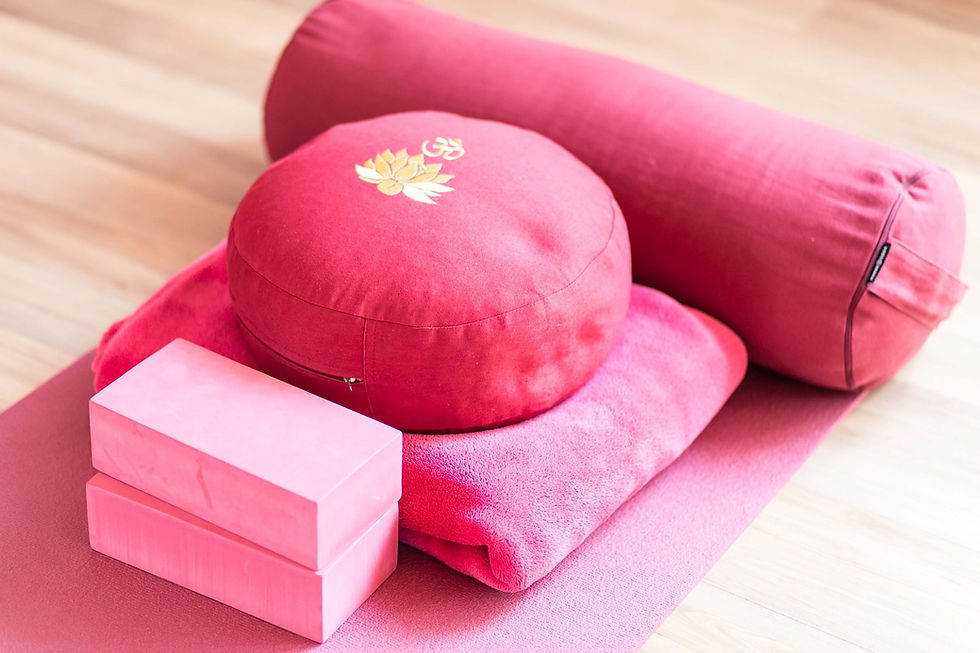
Yin Yoga is a slow, meditative style that holds each pose for 2 - 5 minutes or more. It’s designed to increase circulation in the joints & improve flexibility. The practice focuses on the hips, lower back, & thighs & uses props like bolsters, blankets, & blocks to let gravity do the work, helping to relax. While other forms of yoga focus on the major muscle groups, yin yoga targets the body’s connective tissues.
It requires patience for longer holds in each stretch.
Who Might Like It: Those who need to stretch out after a tough workout, or anyone interested in adramatically slower-paced practice.
IYENGAR YOGA
Iyengar Yoga is a very meticulous style of yoga, placing the emphasis on precision & alignment. The practice is all about the details of your breath control (pranayama) & posture (asana) & is excellent for building strength & flexibility. It emphasizes correct alignment of all parts of the body within each yoga pose.
Who Might Like It: Someone who likes detailed instruction & a very precise practice.
BIKRAM YOGA
It is a form of hot yoga. These classes, like Ashtanga classes, consist of a set series of 26 poses performed in the same order, & the practice has strict rules. Each class is 90 minutes, with 26 postures & two breathing exercises, & the room must be 105° Fahrenheit with 40 percent humidity.
Who Might Like It: Anyone who likes to sweat, someone who wants a more physical practice, or those who like routine.
HOT YOGA
Largely the same thing as Bikram. Generally, the only difference between Bikram & Hot yoga is that the it deviates from Bikram's sequence in some small way, & so they must call themselves by another name. The room will be still be heated & you will still sweat buckets.
Who Might Like It: Anyone who likes to sweat, someone who wants a more physical practice, but doesn't want the same set of sequences every single class.
POWER YOGA
Like Vinyasa yoga, Power yoga traces its roots to Ashtanga but is less regimented & is more open to interpretation by individual teachers. Power yoga moves quickly, is great for strength training, & makes you feel energized. It is a vigorous practice that can be used as a work out.
Who Might Like It: Those who want a good workout.
SIVANANDA YOGA
Sivananda yoga is based on the teachings of Hindu spiritual teacher Swami Sivananda. Classes are generally relaxing: while most yoga classes end with Savasana (a final relaxation/corpse pose), Sivananda starts with this pose, then moves into breathing exercises, sun salutations, & then 12 basic asanas.
Who Might Like It: Those looking for a gentler form of yoga, anyone who wants a more spiritual practice.
RESTORATIVE YOGA
Restorative Yoga sessions allow the body to slow down & relax in a small number of poses. Each pose is held for longer than in conventional classes, sometimes up to twenty minutes, so a session may consist of only four to six poses. The long holding of poses is often assisted with props such as folded blankets, bolsters, & blocks to ensure the body is fully supported & to allow the muscles to completely relax.
Who Might Like It: Anyone who needs to de-stress, those dealing with pain, and someone who struggles to relax.
ACRO YOGA
Acro yoga uses familiar yoga poses like downward dog or plank, & adds a partner. One partner serves as the “base” on the ground, while the other is the “flyer” who contorts themselves on the soles of the base’s feet. Acro yoga allows people to break from the rectangular confines of their yoga mat and find a connection with their fellow practitioners.
Who Might Like It: Those who enjoy practicing with a partner, couples looking to build trust and intimacy, or anyone with an adventurous streak who likes to go upside down.
In a nutshell, every style of yoga has its unique benefits & its completely up to you to decide which style is best for you. You may not even know until you take a few different types of classes.

Comments